
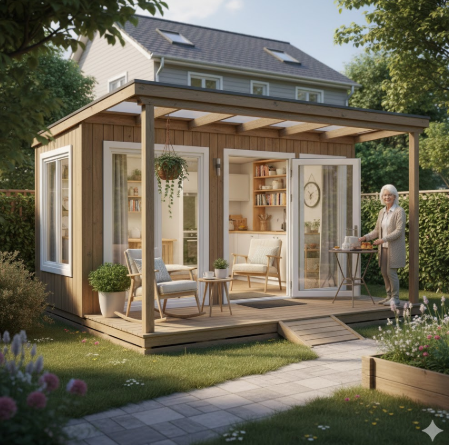
As families across the world rethink how best to care for aging parents, granny space has become one of the most practical and emotionally intelligent housing solutions of the modern era. Rather than separating seniors from family through assisted living facilities or nursing homes, granny space allows older adults to remain close to loved ones while maintaining independence, dignity, and privacy.
The concept is simple, yet powerful. A dedicated living area—whether attached to a main house or built as a small standalone unit—creates a safe, comfortable environment tailored to the physical and emotional needs of seniors. At the same time, it reduces caregiving stress and strengthens family connections. This guide explores granny space in depth, explaining how it works, why it is growing in popularity, and how families can plan one responsibly and successfully.
What Granny Space Really Means
Granny space refers to a private residential area designed specifically for an elderly family member, usually located on the same property as a relative’s primary home. While the name is informal, the idea aligns with professional housing concepts such as accessory dwelling units, in-law suites, and multigenerational housing.
What distinguishes granny space from standard home additions is intent. These spaces are not simply extra rooms; they are purpose-built environments that prioritize accessibility, safety, and long-term usability. The goal is to allow seniors to live independently for as long as possible, without feeling isolated or institutionalized.
Why Granny Space Is Becoming So Popular
The rise of granny space is closely tied to demographic, financial, and cultural shifts. People are living longer, healthcare costs continue to rise, and families increasingly prefer solutions that keep aging relatives close rather than relocating them to unfamiliar environments.
Studies and advocacy from organizations such as AARP consistently show that most older adults prefer aging in place. Remaining in a familiar community improves emotional well-being, supports cognitive health, and preserves social connections. supports this preference while still ensuring that help is nearby when needed.
At the same time, housing shortages and changing zoning laws in many regions have made small secondary dwellings more acceptable and, in some cases, actively encouraged. This has positioned granny space as both a compassionate family choice and a practical housing strategy.
Also Read: Tecnology Explained: Trends, Impact, and the Future
Different Forms of Granny Space
Is not a one-size-fits-all solution. Its form depends on property size, budget, local regulations, and the needs of the senior who will live there.
Some families choose detached units built in the backyard. These offer maximum privacy and feel like independent homes, often resembling small cottages or studios. Others convert existing garages or basements, transforming unused areas into fully functional living spaces. Attached additions are also common, creating a seamless connection to the main home while preserving separation through private entrances and sound insulation.
More recently, modular and prefabricated units have gained popularity. These factory-built options reduce construction time and are often designed with senior accessibility in mind, making them attractive for families seeking efficiency without sacrificing quality.
Also Read: Certified Product Owner Certification is Right Upgrade in London
Designing Granny Space for Safety and Comfort
The success of any depends heavily on design. A beautiful space that ignores mobility limitations or future health changes can quickly become impractical.
Accessibility is fundamental. Step-free entrances, wide doorways, easy-to-use handles, and walk-in showers significantly reduce the risk of falls, which remain one of the most serious health threats to older adults. Flooring should be non-slip and level throughout the unit, while lighting should be bright, even, and glare-free.
Comfort goes beyond physical safety. Natural light, sound insulation, proper ventilation, and temperature control all contribute to daily well-being. Seniors often experience changes in vision and hearing, so thoughtful design choices can dramatically improve quality of life without making the space feel clinical or institutional.
Emotional Well-Being and Independence
One of the most overlooked benefits of is its psychological impact. Maintaining independence plays a critical role in preserving self-esteem and mental health as people age. Granny space allows seniors to cook their own meals, follow personal routines, and host visitors, all while knowing that help is close if needed.
This balance between autonomy and support is difficult to achieve in traditional care facilities. For many families, granny space becomes a middle ground that avoids the extremes of complete isolation or constant supervision.
Also Read: yy68kzj Explained The Rise of a Unique Digital Identifier
Technology and Modern Granny Space Living
Modern granny space often incorporates smart home technology to enhance safety without compromising privacy. Motion-activated lighting, voice-controlled systems, and emergency alert devices can provide reassurance to both seniors and caregivers. When used ethically and with consent, these tools add a layer of protection while allowing older adults to remain in control of their environment.
The integration of technology also makes it easier for family members to respond quickly in emergencies and coordinate care with healthcare providers when necessary.
Zoning Laws and Legal Considerations
Before building, it is essential to understand local zoning and building regulations. Laws vary significantly between regions, and what is permitted in one municipality may be restricted in another.
Some areas limit the size or placement of secondary dwellings, while others specify who may live in them. Utility connections, fire safety standards, and accessibility codes must also be considered. Consulting local planning authorities early in the process can prevent delays and costly redesigns.
Long-term planning is equally important. Families should consider whether the unit can later be rented, repurposed, or sold, depending on local regulations and future needs.
Also Read: PrimaCoast.com Review & Services Features and User Experience
Cost Considerations and Long-Term Value
The cost of creating granny space varies widely depending on design choices, construction methods, and regional factors. Conversions of existing structures are generally less expensive, while detached units involve higher upfront investment.
However, when compared to the ongoing costs of assisted living or nursing care, Often proves financially sensible over time. It can also increase property value by adding flexible living space that appeals to future buyers.
Financing options may include home equity loans, construction loans, or shared family investment. Some families view as both a caregiving solution and a long-term real estate asset.
Granny Space Versus Assisted Living
Choosing between granny space and assisted living is a deeply personal decision. Assisted living offers structured care and professional staff but often comes with high monthly costs and reduced independence. Granny space, by contrast, prioritizes autonomy and family connection, making it ideal for seniors who do not require constant medical supervision.
For many families, Becomes a transitional solution that adapts as needs change, offering flexibility that institutional settings rarely provide.
Also Read: Autocartrends.com Latest Car News Reviews & Google Search
Cultural and Social Context
Multigenerational living has long been the norm in many cultures. Modernizes this tradition by respecting contemporary expectations of privacy and independence. Population trends tracked by institutions like the U.S. Census Bureau show a steady increase in multigenerational households, reflecting shifting values around family, caregiving, and housing.
Planning Granny Space the Right Way
Successful granny space projects begin with honest conversations. Families should discuss expectations, boundaries, and future care needs openly. Involving the senior in design decisions ensures that the space reflects their preferences rather than assumptions.
Professional input from architects or designers experienced in senior housing can prevent costly mistakes and ensure compliance with accessibility standards. Planning for future mobility changes, even if they seem unnecessary now, is one of the wisest investments a family can make.
Frequently Asked Questions About Granny Space
Is granny space the same as an ADU?
In many cases, yes. Granny space is an informal term, while accessory dwelling unit is the official planning designation used by local governments.
Does granny space reduce caregiving stress?
For many families, it does. Having a loved one nearby simplifies daily support while avoiding the intensity of full-time caregiving.
Can granny space adapt to changing health needs?
When designed correctly, can be modified over time with minimal disruption, making it a flexible long-term solution.
Conclusion: Why Granny Space Is a Smart, Human-Centered Choice
Granny space is not just a housing trend—it is a reflection of changing values around aging, family, and independence. By combining thoughtful design, legal awareness, and emotional intelligence, families can create living environments that honor seniors while supporting caregivers.
For those seeking a compassionate alternative to institutional care, granny space offers something increasingly rare: independence without isolation, safety without confinement, and family connection without sacrifice. When done right, it becomes not just a place to live, but a foundation for dignity, comfort, and peace of mind in later life.
