
The mind flayer stranger things storyline is one of the most ambitious examples of long-form villain storytelling in modern television. Rather than relying on a single jump-scare monster, Stranger Things introduces an enemy that is psychological, symbolic, and deeply woven into the emotional lives of its characters. The Mind Flayer is not simply something to be defeated; it is something to be understood.
From its first shadowy appearance looming over Hawkins to its later physical manifestations, the Mind Flayer has shaped the tone, mythology, and emotional stakes of Stranger Things. This article explores the Mind Flayer in depth, examining its origins, abilities, symbolism, and why it remains one of the most unsettling antagonists in television history.
Understanding the Mind Flayer in Stranger Things
The Mind Flayer is an interdimensional entity that originates from the Upside Down, a parallel world that mirrors reality while stripping it of warmth, safety, and autonomy. Unlike traditional villains, the Mind Flayer does not operate through personality or dialogue. Its intelligence is expressed through strategy, possession, and long-term manipulation.
Within the story, the Mind Flayer functions as the central controlling consciousness of the Upside Down. Every creature connected to that dimension operates as part of its hive mind, sharing awareness and purpose. This makes the Mind Flayer less of an individual monster and more of a living system, one that spreads influence rather than simply attacking.
The Origins of the Mind Flayer
Although Stranger Things never provides a definitive origin story, the series offers enough clues to form a coherent understanding. The Mind Flayer appears to predate human contact with the Upside Down, existing as a dominant intelligence that shaped the dimension long before Hawkins became involved.
The name “Mind Flayer” comes from Dungeons & Dragons, which the characters use as a framework to understand threats beyond their comprehension. In D&D lore, mind flayers are beings that enslave others through psychic domination. The show adapts this concept into something far more cosmic, transforming a tabletop enemy into an almost Lovecraftian force.
This deliberate ambiguity strengthens the storytelling. By refusing to fully explain the Mind Flayer’s creation, the series preserves its sense of ancient, unknowable evil.
The Mind Flayer’s Evolution Across Seasons
The mind flayer stranger things arc stands out because the villain evolves rather than repeating itself. Each season reveals a new way the Mind Flayer exerts control.
The Shadow Presence in Season Two
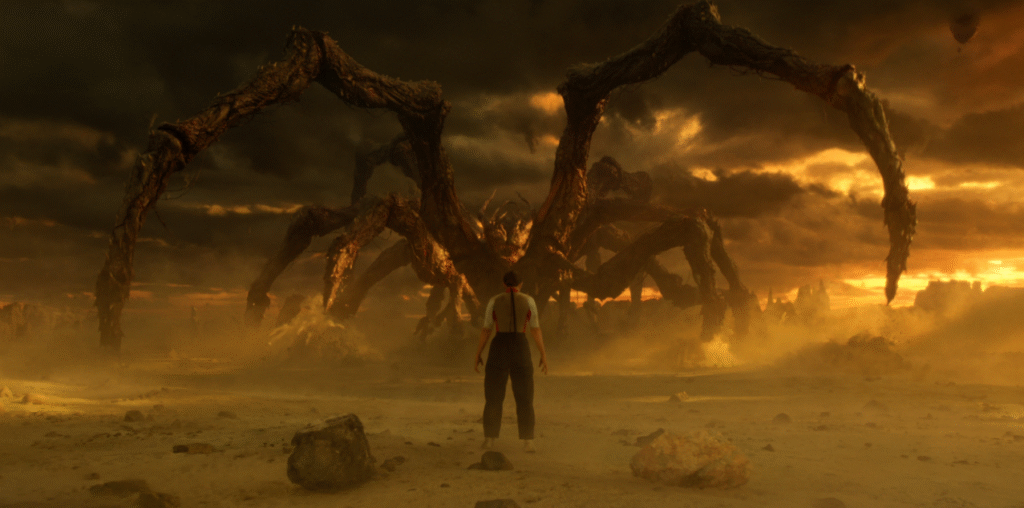
In its earliest major appearance, the Mind Flayer manifests as a colossal, spider-like shadow towering over Hawkins. This version rarely interacts physically with the real world. Instead, it invades minds, most notably that of Will Byers, using fear and memory as entry points.
This form emphasizes scale and helplessness. The Mind Flayer is not something that can be fought directly. It exists above and beyond human power, reinforcing the idea that the greatest threat is not physical destruction but mental domination.
The Physical Form in Season Three
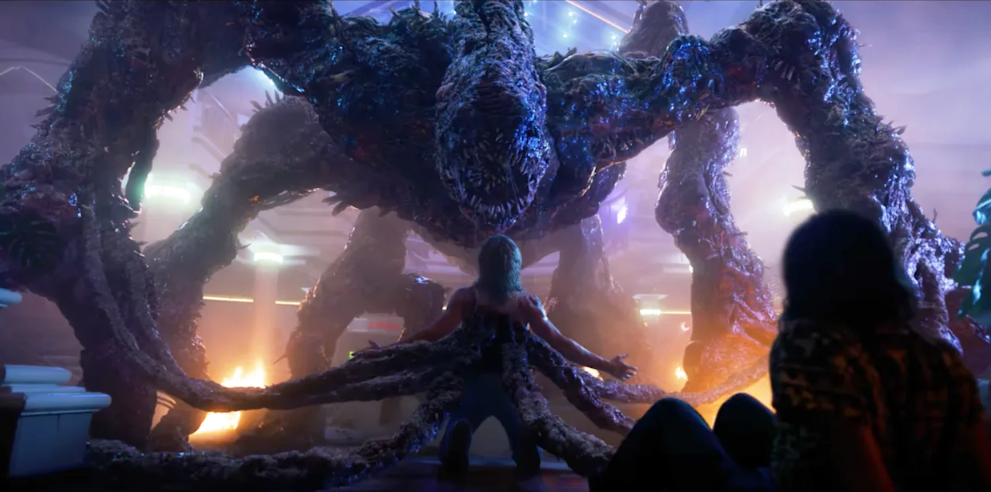
By the third season, the Mind Flayer adapts. Unable to fully cross dimensions, it constructs a body using organic matter from possessed humans. This grotesque transformation signals a shift in tactics. The Mind Flayer no longer hides in shadows. It walks, hunts, and bleeds.
This evolution reflects the rising stakes of the series. As the characters grow older, the threats they face become more direct and violent, while still retaining psychological depth.

Will Byers and the Human Cost of the Mind Flayer
No character is more deeply connected to the Mind Flayer than Will Byers. His possession in Season Two is one of the most emotionally complex arcs in the series, portraying control not as spectacle but as suffering.
Will’s experience mirrors real-world trauma. He is isolated, misunderstood, and blamed for behaviors he cannot control. The Mind Flayer uses his fear as a gateway, exploiting emotional vulnerability rather than physical weakness.
This storyline elevates the Mind Flayer beyond a typical antagonist. It becomes a metaphor for lingering trauma, depression, and the invisible scars left by past experiences. The horror lies not in what the Mind Flayer does to Will’s body, but in what it takes from his sense of self.
Also Read: Why Knowing How to Block Someone on TikTok Matters
Powers and Capabilities of the Mind Flayer
The Mind Flayer’s abilities extend far beyond brute force. Its most defining trait is control.
Through hive-mind domination, it connects every Upside Down creature into a single consciousness. This allows it to gather information instantly and respond strategically to threats. However, this connection also creates vulnerability, as pain inflicted on one part of the system can weaken the whole.
Possession is another central ability. The Mind Flayer can override human autonomy while leaving the victim outwardly functional. This makes it uniquely dangerous, as it can infiltrate communities without immediate detection.
The Mind Flayer also reshapes environments. Wherever its influence spreads, the world becomes colder, darker, and hostile to life. This environmental corruption reinforces its role as a force of erasure rather than conquest.
Symbolism Behind the Mind Flayer
The lasting impact of the mind flayer stranger things storyline comes from what it represents rather than what it destroys.
At its core, the Mind Flayer symbolizes loss of control. It reflects fears of being consumed by forces beyond one’s understanding, whether those forces are trauma, addiction, authoritarian power, or collective fear.
Its hive-mind structure also mirrors how ideas and emotions spread through communities. Fear becomes contagious. Silence enables control. Resistance requires connection, empathy, and shared action.
These themes align with the show’s broader focus on friendship and emotional honesty as tools of survival.
The Mind Flayer and the Larger Mythology
As the series expands, new antagonists emerge, most notably Vecna. While Vecna brings a personal, human face to evil, the Mind Flayer represents something far larger.
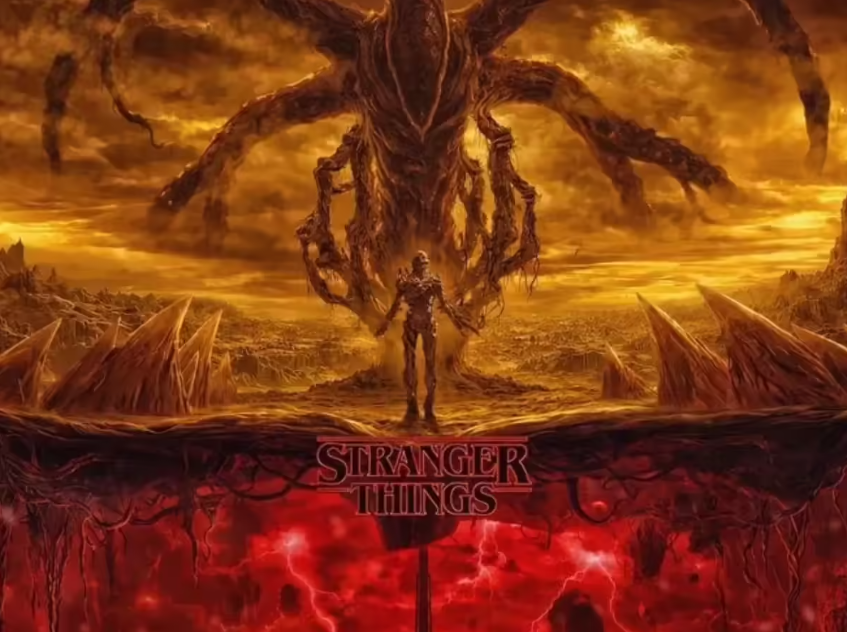
Many interpretations suggest that the Mind Flayer is the true power behind the Upside Down, with humanoid villains acting as extensions of its will. This layered hierarchy allows the story to explore both cosmic horror and intimate, character-driven conflict without undermining either.
The mythology remains intentionally flexible, ensuring that the Mind Flayer’s presence continues to loom even when it is not physically on screen.
Also Read: هنتاوي com Niche Anime Platform
Creative Vision Behind the Mind Flayer
The creators of the series, the Duffer Brothers, have spoken about their desire to blend 1980s horror influences with modern emotional storytelling. The Mind Flayer embodies this approach, combining the scale of classic sci-fi villains with deeply human consequences.
By prioritizing mood, symbolism, and long-term character impact, the show avoids the trap of making the Mind Flayer feel repetitive. Each appearance adds meaning rather than diminishing fear.
Why the Mind Flayer Endures as a Villain
The Mind Flayer resonates because it does not rely on spectacle alone. It challenges characters psychologically, emotionally, and morally. It cannot be reasoned with, bargained with, or fully understood.
In a television landscape crowded with forgettable villains, the Mind Flayer stands apart as a force that shapes narrative, theme, and character growth simultaneously.
Conclusion: The Legacy of the Mind Flayer in Stranger Things
The mind flayer stranger things arc represents the show at its most ambitious. It transforms a supernatural enemy into a symbol of fear, trauma, and collective resistance. Through its evolving forms and deep thematic resonance, the Mind Flayer has secured its place as one of television’s most memorable antagonists.
As Stranger Things continues to be analyzed and revisited, the Mind Flayer remains a reminder that the most frightening monsters are often the ones that invade the mind rather than the body.
