
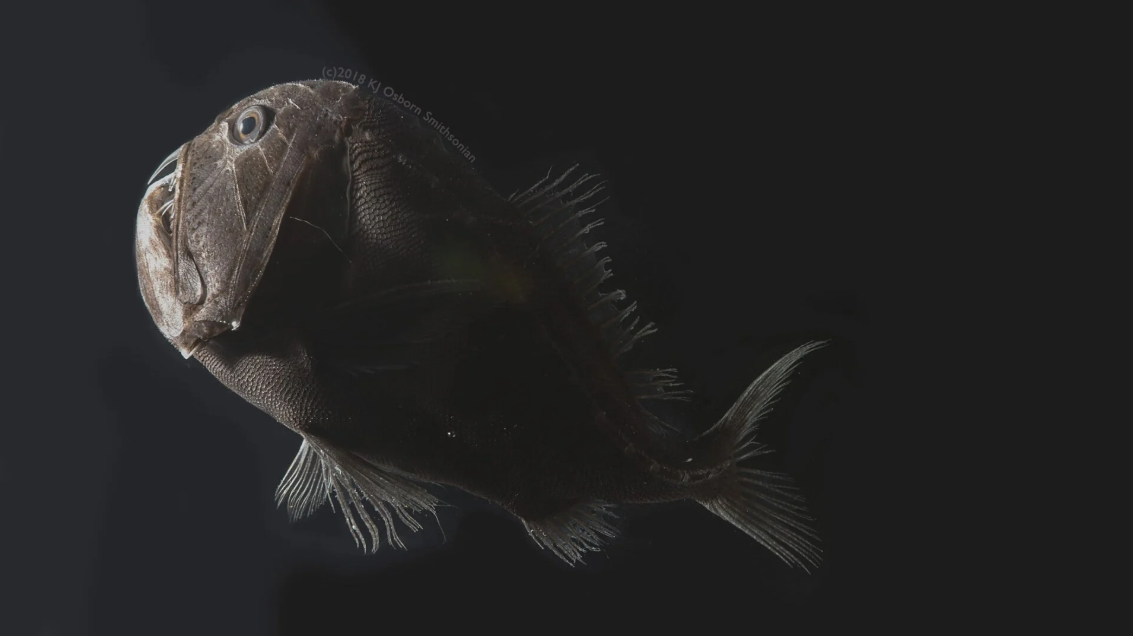
The world of deep sea fish is one of the most fascinating and least understood ecosystems on Earth. Far below the sunlit surface of the ocean lies a realm of crushing pressure, near-freezing temperatures, and almost total darkness. Yet, despite these extreme conditions, thousands of deep sea fish species not only survive but thrive, displaying some of the most unusual shapes, behaviors, and adaptations found in nature.
From scary deep sea fish with glowing teeth to weird deep sea fish that look almost alien, the deep ocean challenges everything we think we know about life. Scientists estimate that more than 80 percent of the ocean remains unexplored, making deep sea fish a constant source of new discoveries, rare sightings, and scientific breakthroughs.
Understanding the Deep Sea Environment
To truly understand deep sea fish, it is essential to understand where they live. The deep sea generally refers to ocean depths below 200 meters, where sunlight can no longer penetrate effectively. This zone is divided into layers, including the mesopelagic, bathypelagic, abyssopelagic, and hadal zones.
Pressure in these depths can exceed 1,000 times the pressure at sea level. Temperatures are often just above freezing, and food is scarce. Most nutrients come from marine snow, a slow rain of organic material from upper layers, or from chemosynthesis near hydrothermal vents.
Organizations like NOAA have played a key role in mapping these zones and documenting habitats, helping scientists understand how life adapts to such extremes.
What Makes Deep Sea Fish Unique?
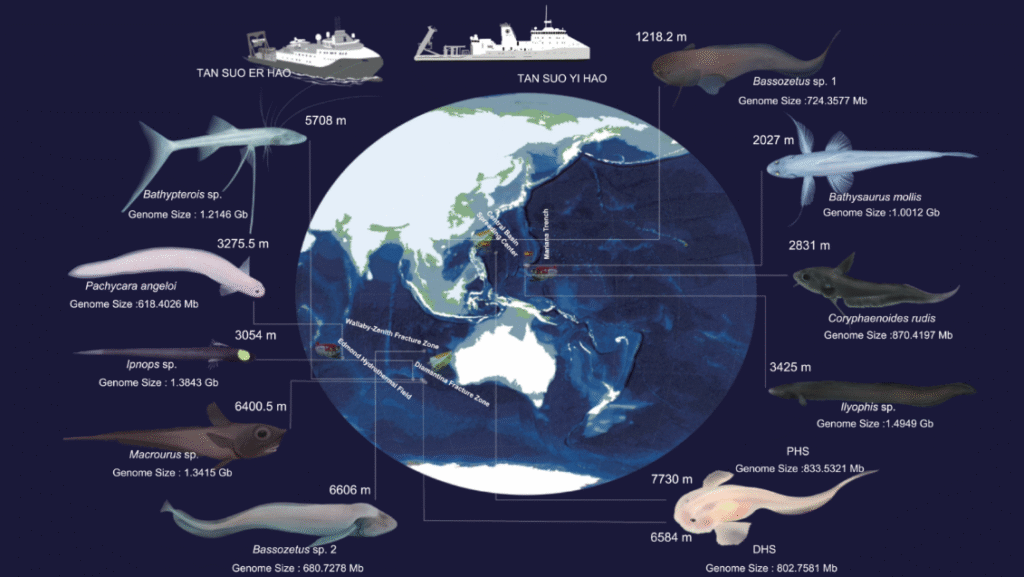
Defined not only by where they live but by how they survive. Over millions of years, they have evolved extraordinary adaptations that set them apart from shallow-water species.
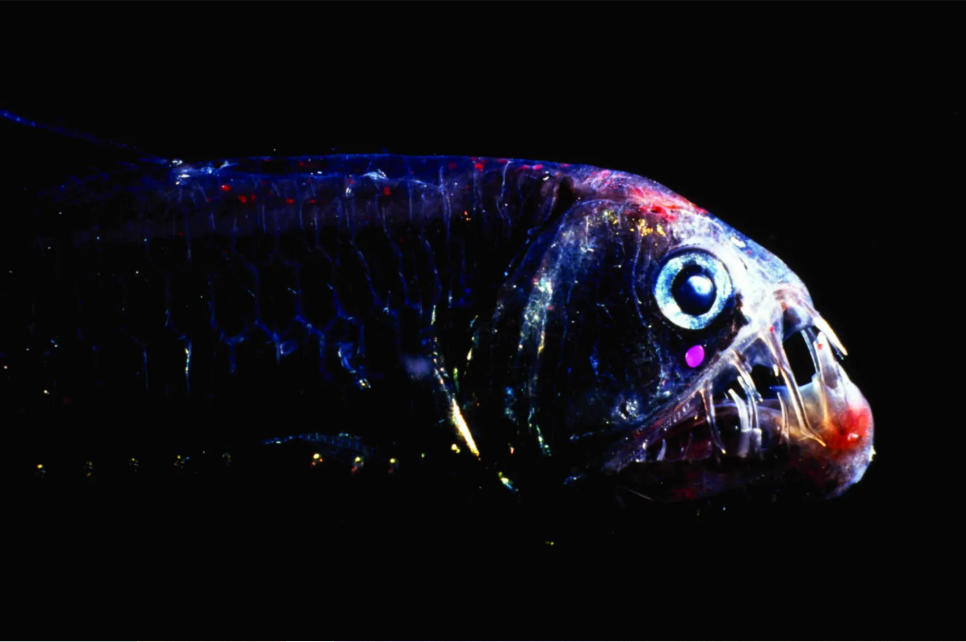
Many have bioluminescence, the ability to produce light through chemical reactions in their bodies. This light is used to attract prey, confuse predators, or communicate with potential mates. Others have oversized mouths, expandable stomachs, or needle-like teeth that allow them to capture prey whenever the opportunity arises.
Another defining feature of species is energy efficiency. Since food is limited, these fish often move slowly, conserve energy, and can survive long periods without eating. Their bones are often lighter and less calcified, helping them withstand intense pressure.
Also Read:- Big Into Energy Labubu: The Secret, the Box, and the Love Behind the Phenomenon
Deep Sea Fish Species: Diversity Beneath the Surface
Scientists estimate that there may be over 15,000 deep sea fish species, with new ones being discovered every year. Some species are widespread across multiple ocean basins, while others exist only in very specific habitats.
Anglerfish are among the most well-known species, famous for the glowing lure that extends from their heads. Dragonfish are another iconic group, known for their sharp teeth and red or blue bioluminescence. Grenadiers, also called rattails, are among the most abundant and play a crucial role in deep ocean food webs.
Research institutions such as Monterey Bay Aquarium Research Institute have used remotely operated vehicles to observe species in their natural environments, revealing behaviors that were once impossible to study.
Also Read:- Why the Miami Vice Drink Is a True Icon
Deep Sea Fish Names and Their Meanings
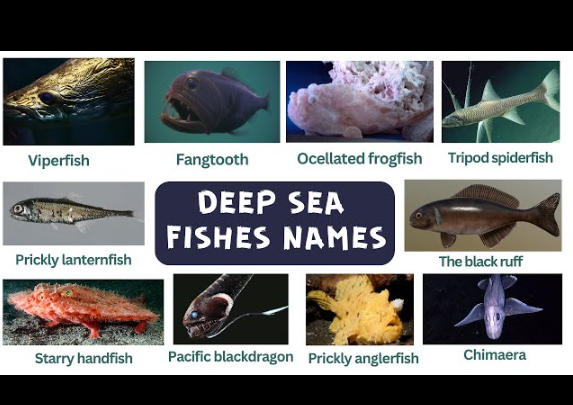
Names often reflect their appearance, behavior, or habitat. Some names sound almost mythical, adding to the mystery of the deep ocean.
The goblin shark gets its name from its elongated snout and protruding jaw, giving it a creature-like appearance. The viperfish is named for its long, fang-like teeth that resemble those of a snake. The barreleye fish is named for its transparent head and barrel-shaped eyes that rotate upward to detect prey.
Scientific names, often derived from Latin or Greek, provide additional insight into a fish’s characteristics. Learning names helps researchers communicate clearly and avoid confusion, especially when new species are discovered.
Also Read:- Transfusion Drink: Complete Guide, Recipe, Meaning, and Golf Tradition
Scary Deep Sea Fish and Why They Look So Terrifying
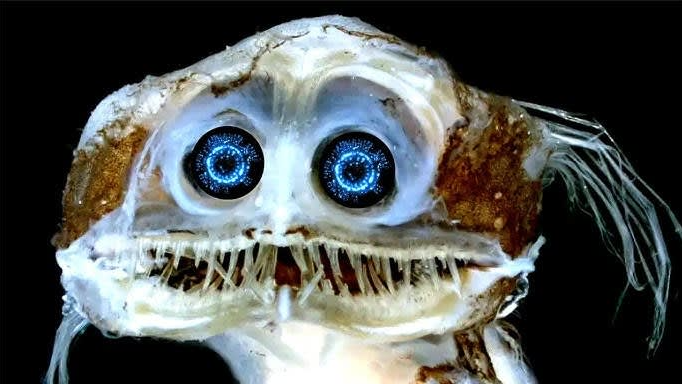
Scary deep sea fish often appear frightening because their features are adapted to survival, not beauty. Large mouths, sharp teeth, and glowing eyes are common traits that help these fish capture prey in total darkness.
The anglerfish, with its dangling bioluminescent lure, is often considered one of the scariest. The gulper eel, also known as the pelican eel, has an enormous mouth that can open wide enough to swallow prey larger than itself. Fangtooth fish have some of the largest teeth relative to body size of any fish in the ocean.
Despite their appearance, scary deep sea fish are rarely aggressive toward humans. Most live far below depths accessible to divers, and encounters are extremely rare.
Also Read:- Matching Tattoos: Meaningful Ink That Connects Hearts, Stories, and Souls
Weird Deep Sea Fish That Look Out of This World
Weird deep sea fish challenge our ideas of what a fish should look like. Some have transparent bodies, others lack scales, and some appear almost gelatinous.
The blobfish, often labeled the world’s ugliest fish, looks dramatically different in its natural deep sea environment compared to when it is brought to the surface. The tripod fish has elongated fin rays that allow it to stand on the seafloor. The barreleye fish’s see-through head reveals its internal eye structure, a feature unmatched by most other animals.
These weird are perfect examples of evolution at work, showing how life can adapt in surprising ways when faced with extreme conditions.
Also Read:- Matching Sweat Sets: The Ultimate Guide to Comfort, Style, and Everyday Fashion
Rare Deep Sea Fish and Why They Are Hard to Study
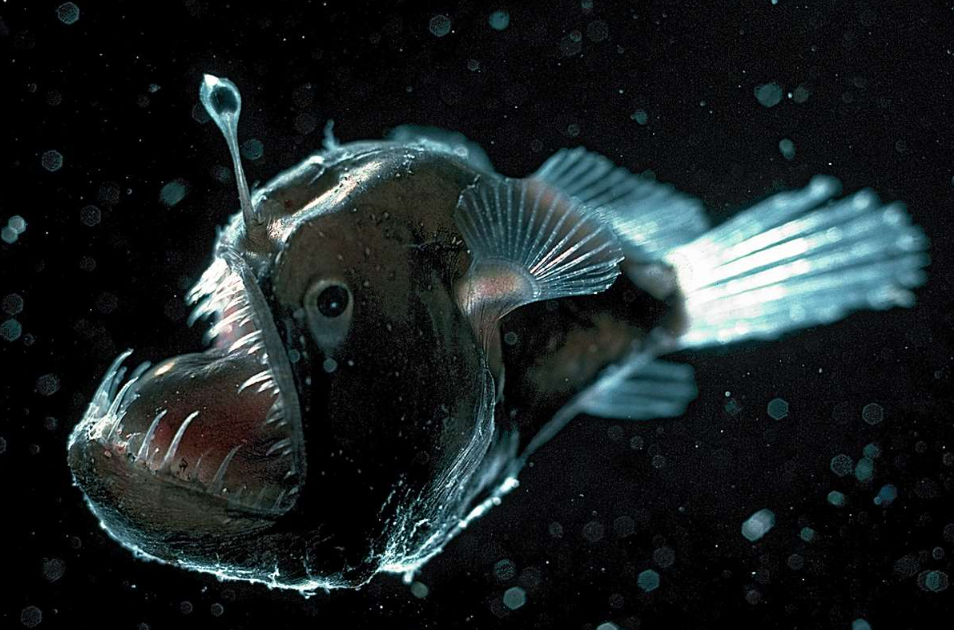
Rare deep sea fish are not necessarily rare in population, but rare in human observation. Many species live in isolated habitats or at depths that are difficult and expensive to explore.
Some rare deep sea fish are known from only a handful of specimens collected by trawls or photographed by submersibles. Others may exist in limited geographic regions, making them vulnerable to environmental changes.
Exploration missions, often supported by institutions like National Geographic Society, continue to uncover rare, expanding our understanding of biodiversity in the abyss.
Also Read:- Fly Fishing Rod Guide: Types, Combos, Reels & Buying Tips
The Biggest Deep Sea Fish Ever Discovered
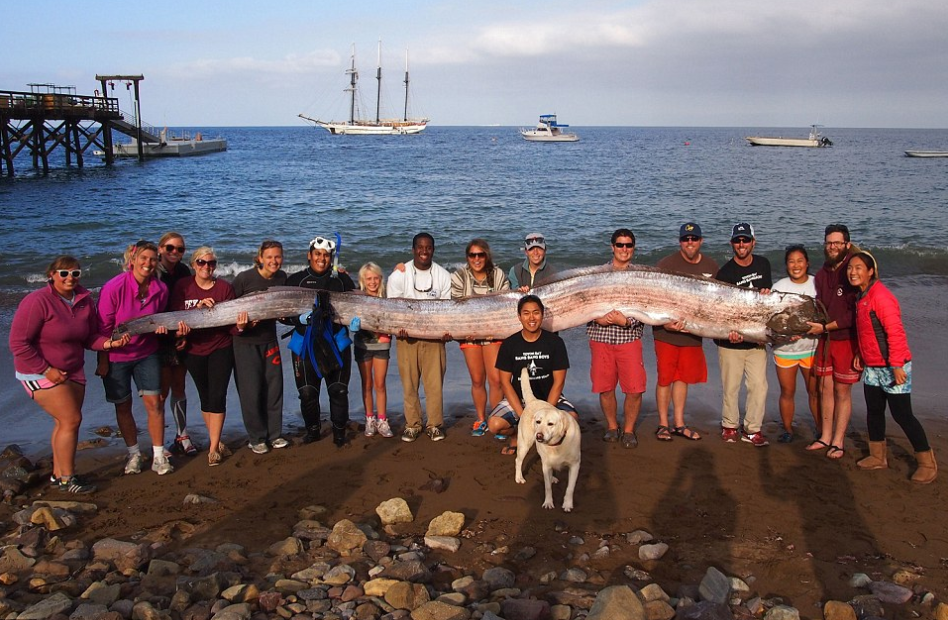
When discussing the biggest, size can be measured by length, weight, or mass. One of the largest is the oarfish, which can grow over 8 meters long. Often called the “king of herrings,” the oarfish lives at great depths and is rarely seen alive.
Another massive deep sea species is the Greenland shark, which inhabits deep, cold waters and can live for over 250 years. Although not exclusively, it spends much of its life at significant depths.
These giants demonstrate that the deep ocean is capable of supporting enormous life forms, even in environments with limited food.
Also Read:- Fiddle Leaf Fig Care: The Complete Expert Guide for Healthy Growth
The Role of Deep Sea Fish in Marine Ecosystems
play a vital role in maintaining ocean health. They are key components of deep-sea food webs, linking surface ecosystems with the ocean floor.
Many feed on marine snow, recycling nutrients and preventing organic matter from accumulating excessively on the seabed. Others prey on smaller organisms, helping regulate population balance.
The carbon cycle is also influenced by D S F. By consuming organic matter and transporting it deeper into the ocean, these fish help store carbon, playing a role in climate regulation.
Human Impact on Deep Sea Fish Populations
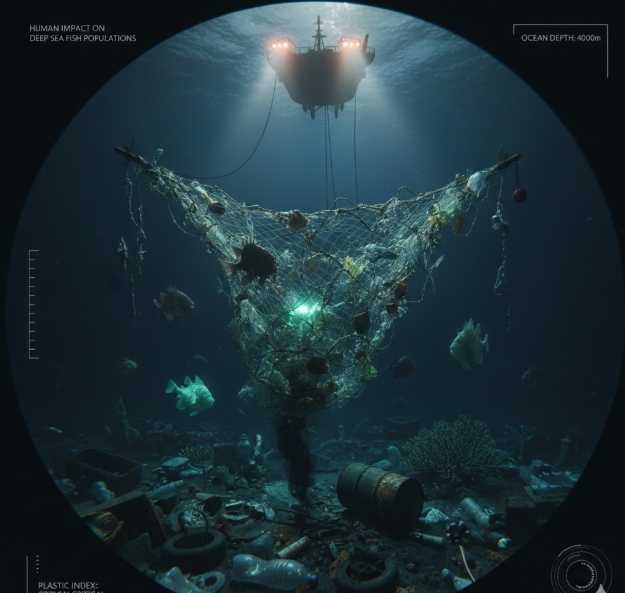
Although deep sea fish live far from human activity, they are not immune to its effects. Deep-sea fishing, especially bottom trawling, can damage fragile habitats and remove slow-growing species that take decades to recover.
Pollution, including plastic waste and chemical contaminants, has been found even in the deepest ocean trenches. Climate change is altering ocean temperatures and oxygen levels, potentially affecting distribution and survival.
Sustainable fishing practices and international regulations are essential to protect species for future generations.
Also Read:- What Is Feel Free Drink? A Complete In-Depth Guide
How Scientists Study Deep Sea Fish Today
Modern technology has revolutionized deep sea research. Remotely operated vehicles, autonomous underwater vehicles, and deep-sea submersibles allow scientists to observe in real time.
High-definition cameras, environmental sensors, and genetic analysis tools provide detailed data without removing fish from their habitats. These methods reduce harm and improve accuracy.
Continued investment in deep sea research is critical for discovering new species, understanding ecosystems, and informing conservation efforts.
Conclusion:
Represent one of the last great frontiers of life on Earth. From scary deep sea fish with glowing lures to weird that defy imagination, these creatures reveal the incredible adaptability of life.
Understanding deep sea fish species, names, rare discoveries, and the biggest giants of the abyss is not just about curiosity. It is about protecting ecosystems that play a vital role in ocean health and global climate balance.
As exploration continues and technology advances, will remain central to scientific discovery, environmental protection, and our understanding of the planet we call home.
For More UpdateS Visit: News Brick
